

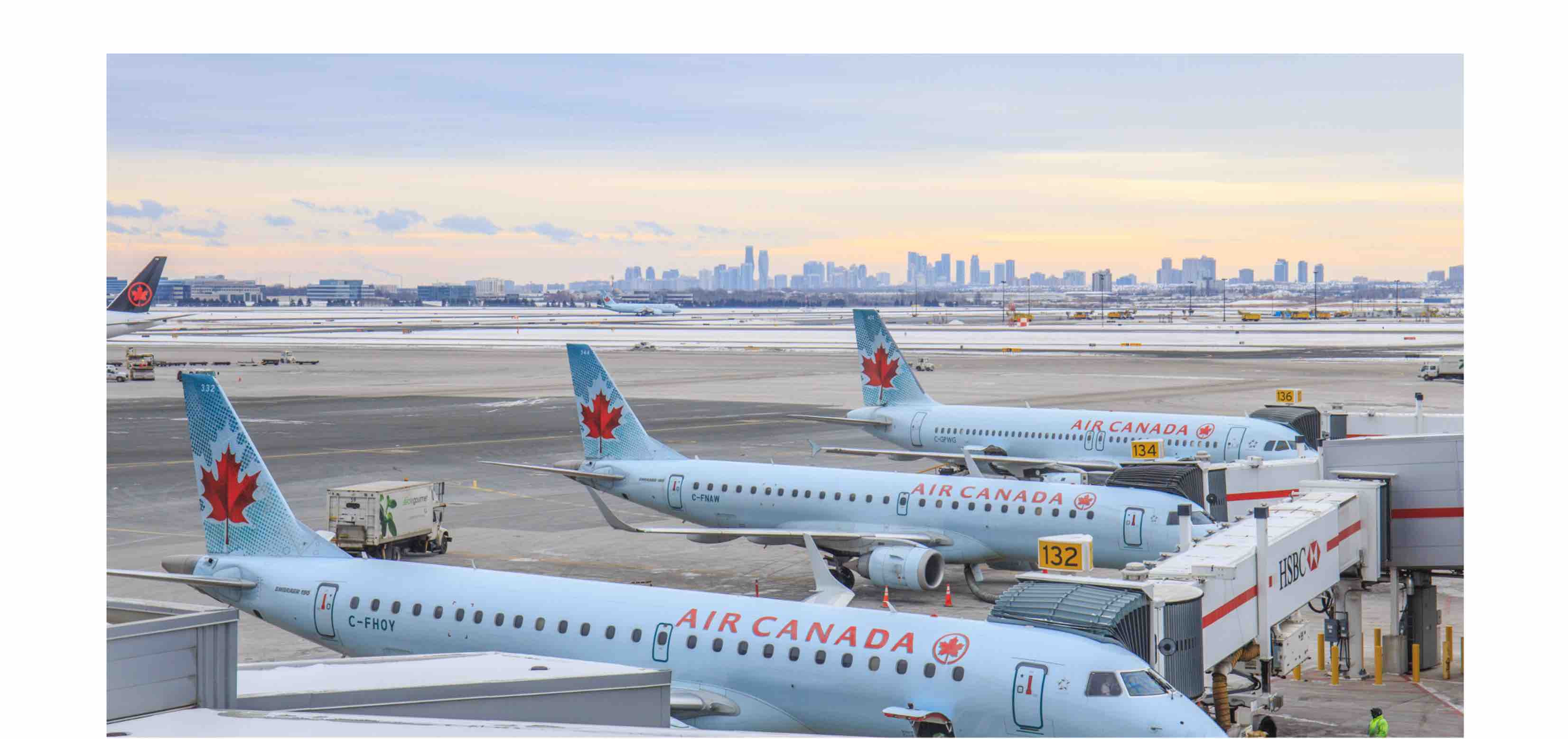
When you think about aviation emissions, you probably picture airplanes high in the sky crossing continents. That’s where most of us imagine the impact happening; far above cities and out of sight, almost disconnected from everyday life.
What often gets overlooked is everything that happens before that moment.
Before a plane lifts off, it's moving across the airport, waiting in line, and running systems in the background. During this time, fuel is still being burned without the visible signs we usually associate with flight. There are no long trails in the sky and nothing dramatic to catch your attention. It happens quietly on the ground in the same space where people live and work.
A surprising amount of pollution actually happens before a plane even leaves the ground.
At large airports, aircraft typically spend around 15-20 minutes taxiing before takeoff, depending on congestion and airport layout. For simplicity, a midpoint estimate of 17 minutes can be used. During this time, engines and onboard systems are still burning fuel. Seventeen minutes isn't much. It feels so small, right?
However, Toronto Pearson handles roughly 400,000 aircraft movements per year, which is about 1,000 per day. When you scale that up, those minutes turn into something much larger:
17 minutes/movement × 1,000 movements/day = 17,000 minutes
17,000 minutes ÷ 60 minutes/hour ≈ 283 hours
This means aircraft engines are running on the ground for over 280 total hours every single day. This is a simplified estimate, but it shows how small amounts of time per flight can scale across a large number of daily operations.
Because Pearson Airport sits directly in Mississauga, this is not happening far away; It is affecting the same air that people in Peel Region breathe.
What Actually Happens Before Takeoff
Before every flight, there is a sequence of movements that most people never see. The aircraft pushes back from the gate, slowly makes its way across the airport, and often waits in line before takeoff.
Even when a plane looks still at the gate, it is often still using energy. Many aircraft run something called an auxiliary power unit, or APU. It is a small engine located in the tail that provides electricity and air conditioning while the main engines are off. It keeps the cabin running, but it also burns jet fuel and produces emissions. When nothing seems to be happening, fuel is still being used.
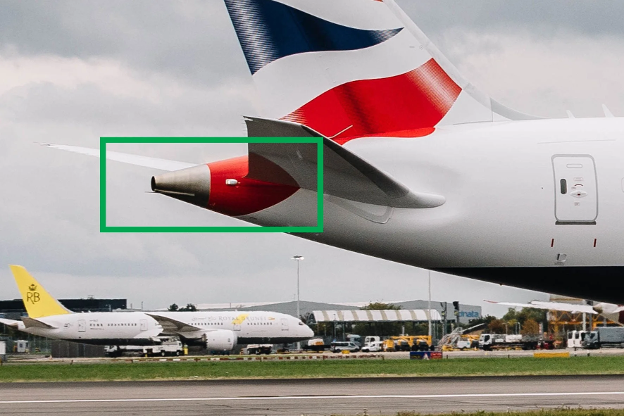
A single aircraft can burn hundreds of kilograms of fuel during taxi alone, plus additional fuel while the APU is running. Multiply that across hundreds of flights each day, and it adds up quickly.
Why This Matters Locally
Toronto Pearson is one of the busiest airports in Canada, with aircraft constantly arriving, departing, and moving across the ground throughout the day. This means that ground operations are not occasional; They are happening continuously, from early morning to late at night in a fixed location within Peel Region.
What makes these emissions important is not just how much fuel is burned, but where the emissions occur. When aircraft are flying at high altitude, emissions are spread out over a large area and become diluted before they reach the ground. However, the situation is different on the ground. Emissions are released directly into the surrounding environment at the same level where people live, work, and breathe.
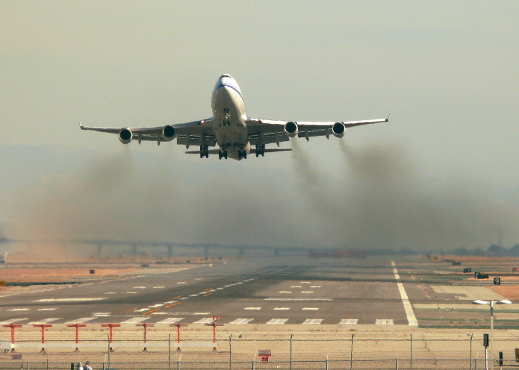
During taxiing, waiting, and gate operations, aircraft produce pollutants such as nitrogen oxides and fine particulate matter. These are the same types of pollutants associated with urban air pollution. They are linked to respiratory irritation, asthma, and longer-term cardiovascular effects. The impact of a single exposure is small, but the concern comes from repetition. At a major airport like Pearson, these emissions are released in the same place, over and over again, throughout the day.
This kind of repeated exposure matters most for people who are consistently nearby. If you spend time around the airport, whether working there or living close by, you are not exposed to these pollutants just once. Airport ground crews can spend hours each day near aircraft and ground equipment, often in areas where emissions are most concentrated. Even if you are not on the runway, being part of a nearby community in Mississauga means that you are still sharing the same air. What matters is not a single moment, but the fact that this exposure happens day after day. That repetition creates a local environmental effect that is very different from emissions released high in the atmosphere over time.
To put things into perspective, aviation is not the largest source of pollution in Peel Region. If you think about your own daily life, road traffic is likely a much bigger part of it. However, airport emissions behave differently; They are concentrated in one place, continuously occur, and come from a major piece of infrastructure built right into the community. Because of this, their impact is not spread out or fluctuating. It is local, persistent, and part of the environment you move through every day.
Aviation isn’t just happening far above you, it is part of the air around you.


